
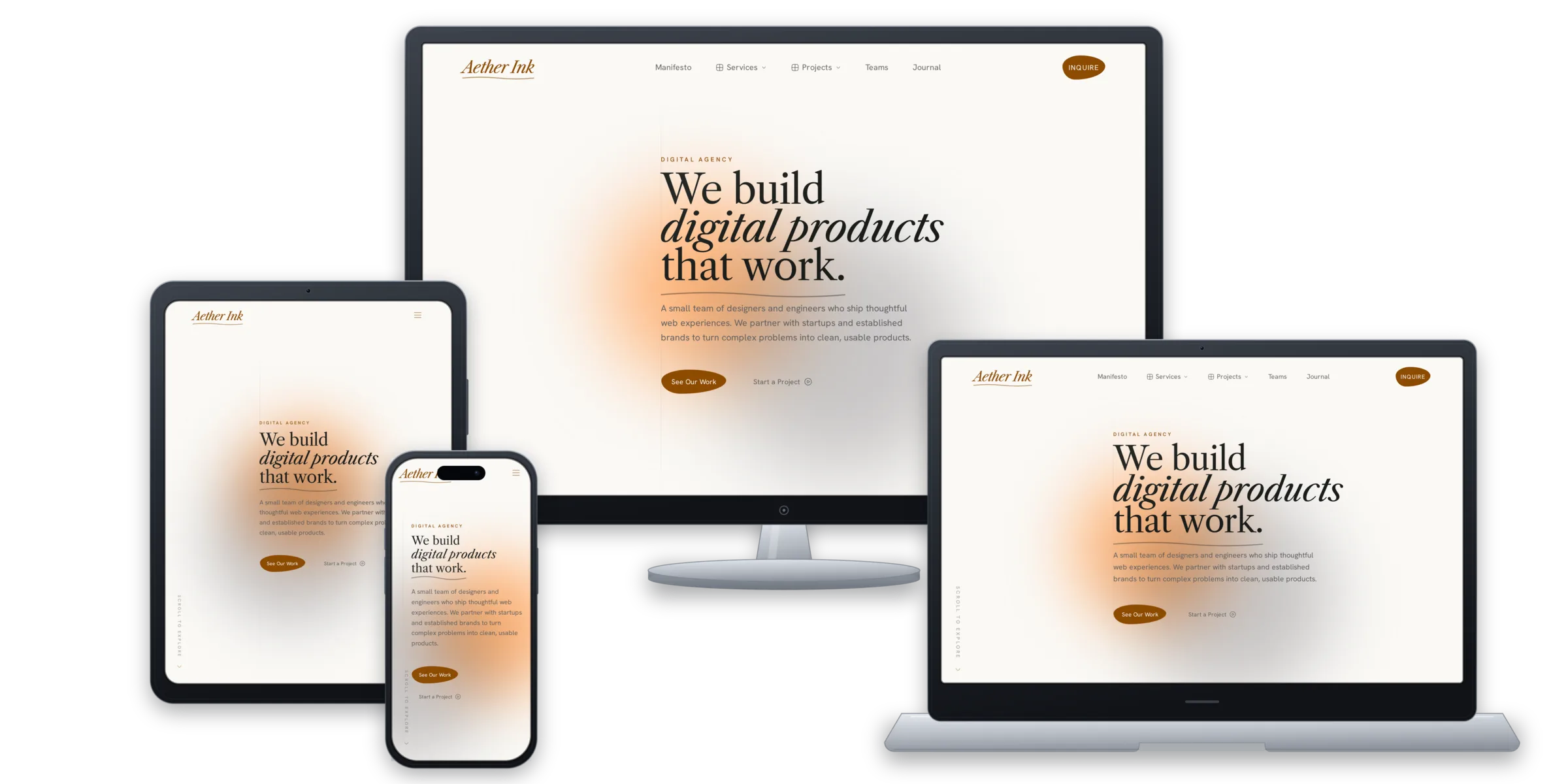
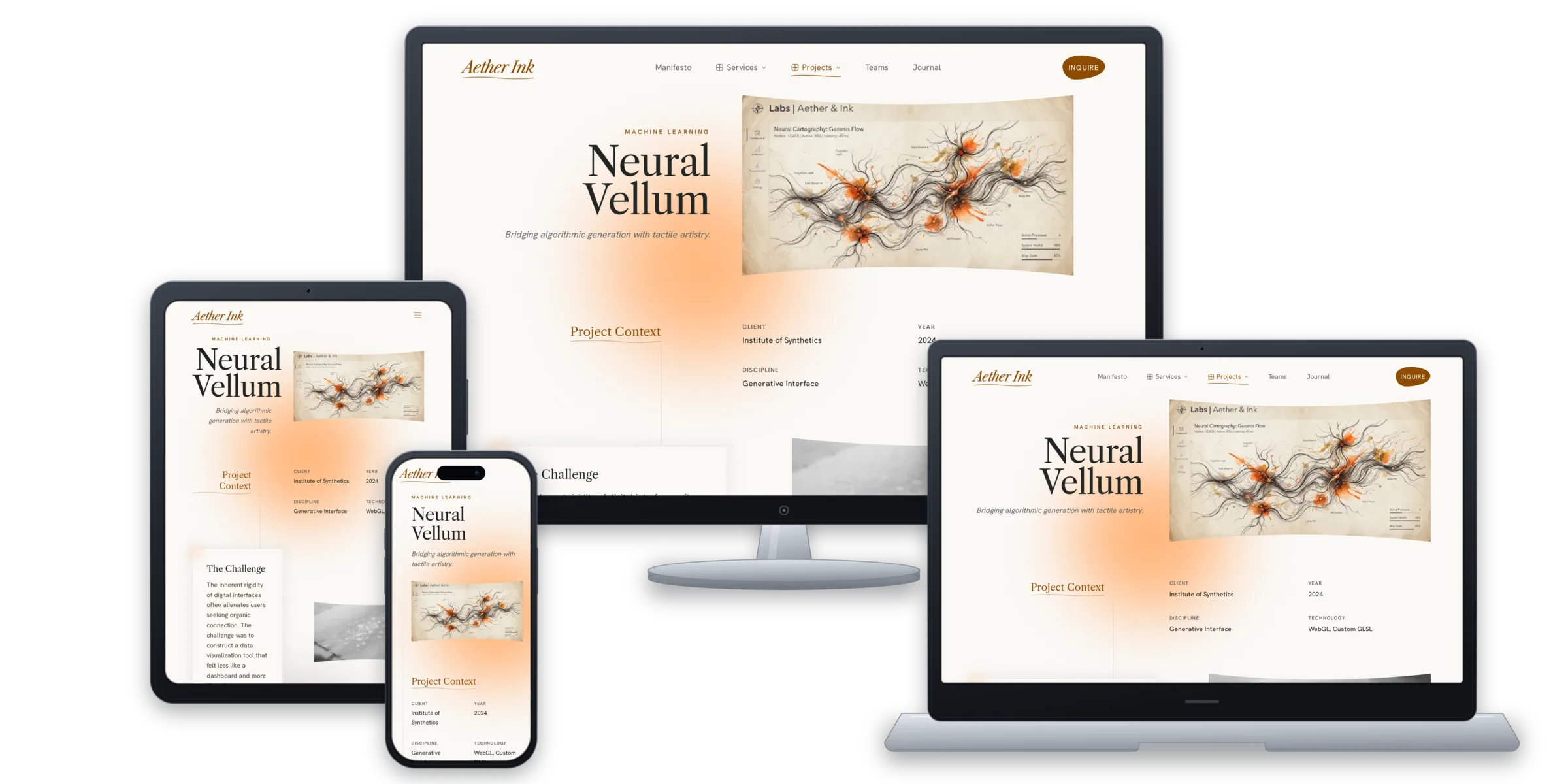
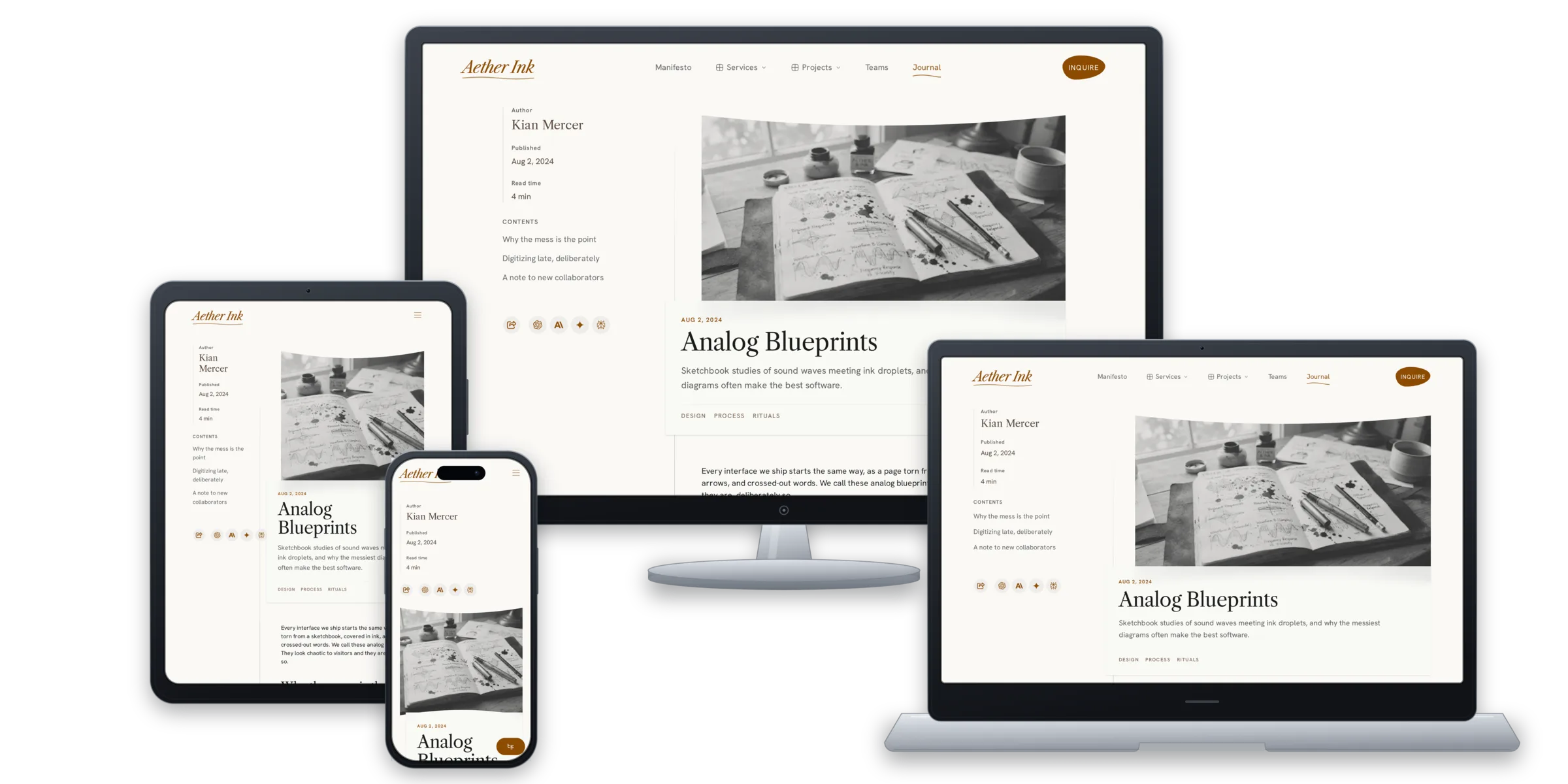
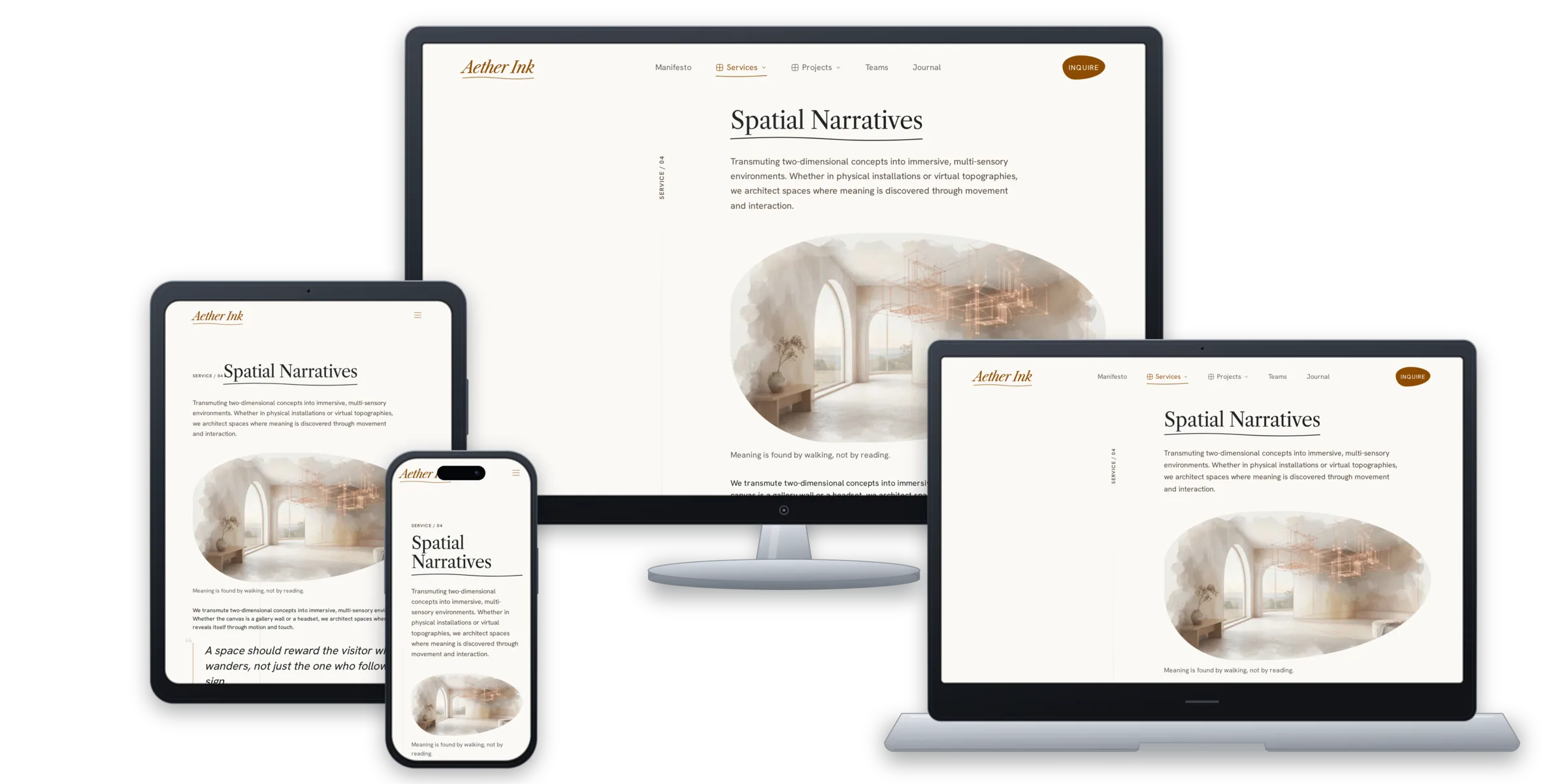
Aether Ink
An AI-Native Agency Template Inspired by Literature
A website template that looks like a book and is run by conversation. Add projects, change colours, and publish without opening a code editor.
Two weeks, September 2026
Most website templates look finished on day one. By day two, every change is yours to make by hand. Aether Ink was built so day two is a conversation.
A website that looks like a book
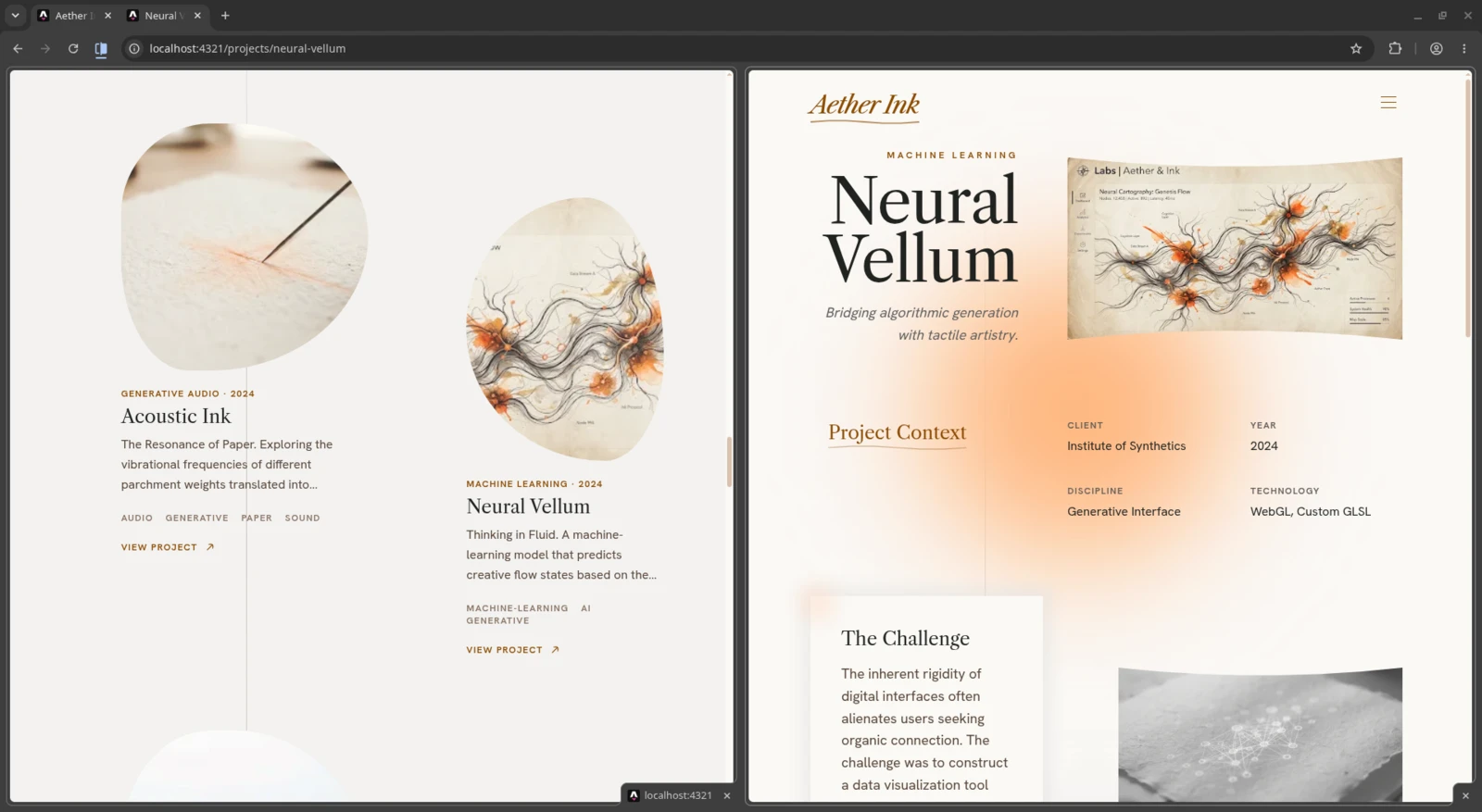
Aether Ink is a template for agency websites, and it takes its shape from print. Ink spreads across the page. A dark spine runs down the left edge. The menu reads like a table of contents, and a project reads like a chapter.
It arrives finished. Projects, services, articles, team profiles, and the contact form are already wired together. Adding ten projects costs the same as adding one.
The real difference is what happens after you buy it. You never open a code editor to publish a project. You say what you want, answer a few questions, and the template writes the page.
The part that usually goes wrong
Buying a template usually buys you a design. Everything after that is maintenance.
A new case study means finding the right files, writing the page, resizing the pictures, and updating every list that points at it. A new colour scheme means going through the theme by hand and hoping you caught every shade.
All of that assumes you can read code. It also assumes you remember which file holds the team list, and which file holds the number printed beside it.
There is a second problem. Technology sites all look the same: dark background, screenshot grid, glowing headline. A studio cannot look distinctive inside a template everyone already owns.
Aether Ink had to be both things at once. Different on the outside, and calm to run on the inside.
The problem, in 37 seconds
The studio made the same argument in 37 seconds. Aether Ink is the template version of the answer.
Publishing without touching code
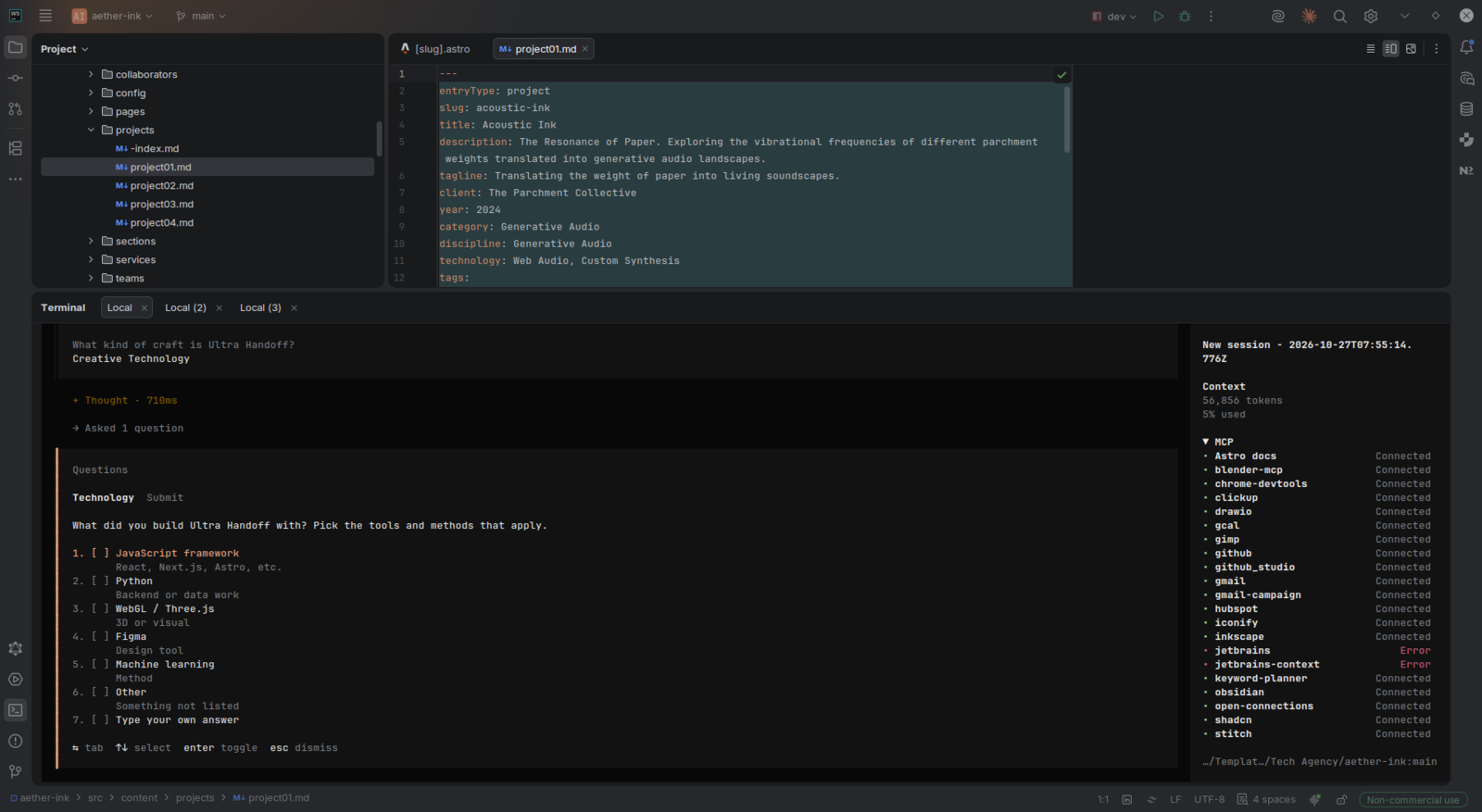
Six commands handle content. Each one asks a few questions, then writes the files and updates everything that depends on them.
You answer questions. The template does the wiring.
| Command | What you get |
|---|---|
| /create | Asks what you want to add, then sends you to the right command |
| /new-blog | A finished article, ready to read |
| /new-project | A full case study page |
| /new-service | A service entry and the page it lives on |
| /new-person | A team profile, with the headcount updated |
| /new-testimonial | A client quote, copied word for word |
The testimonial command matters most. A command that rewrites a client quote is a command that invents one. This one copies the words exactly.
Ask for a new look
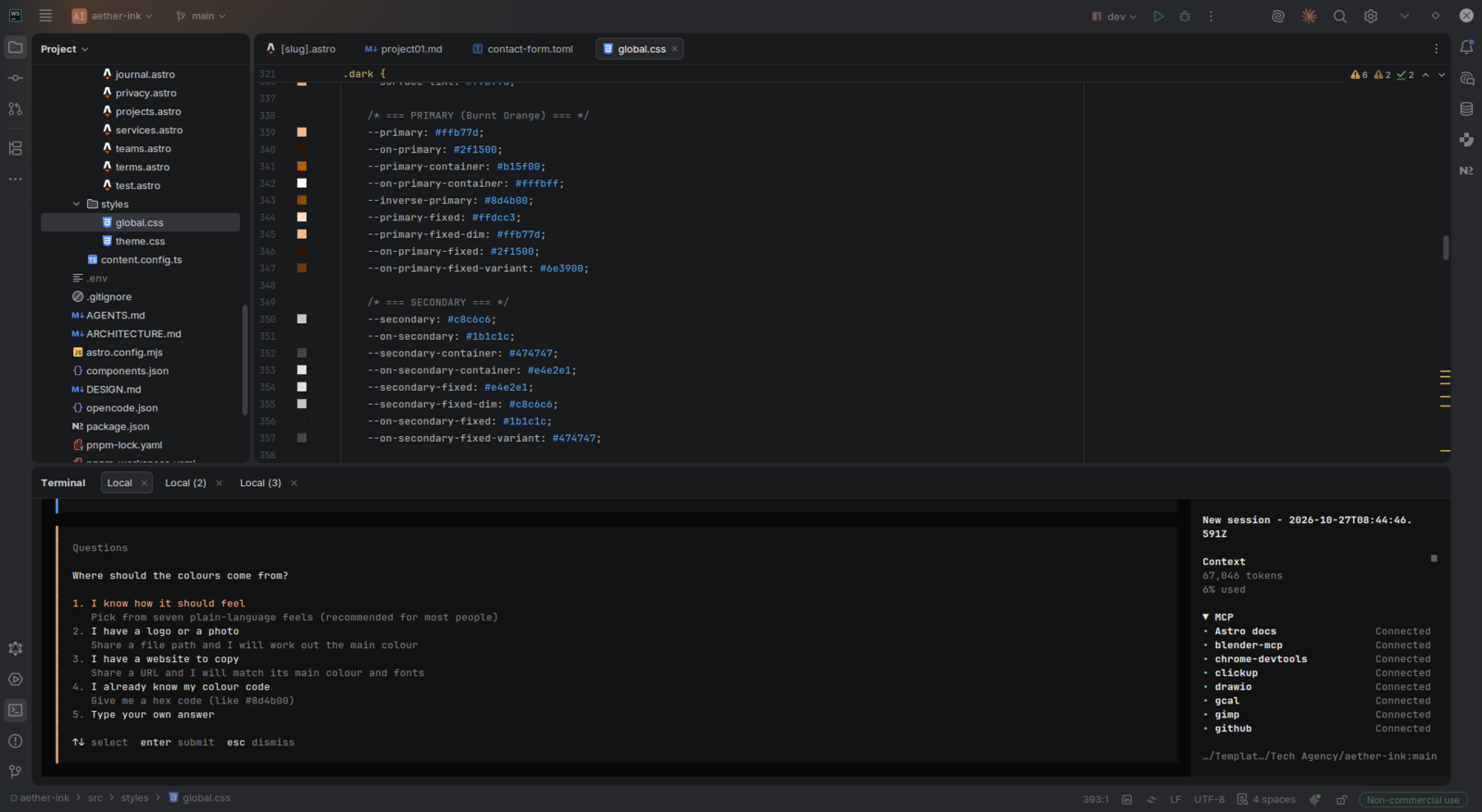
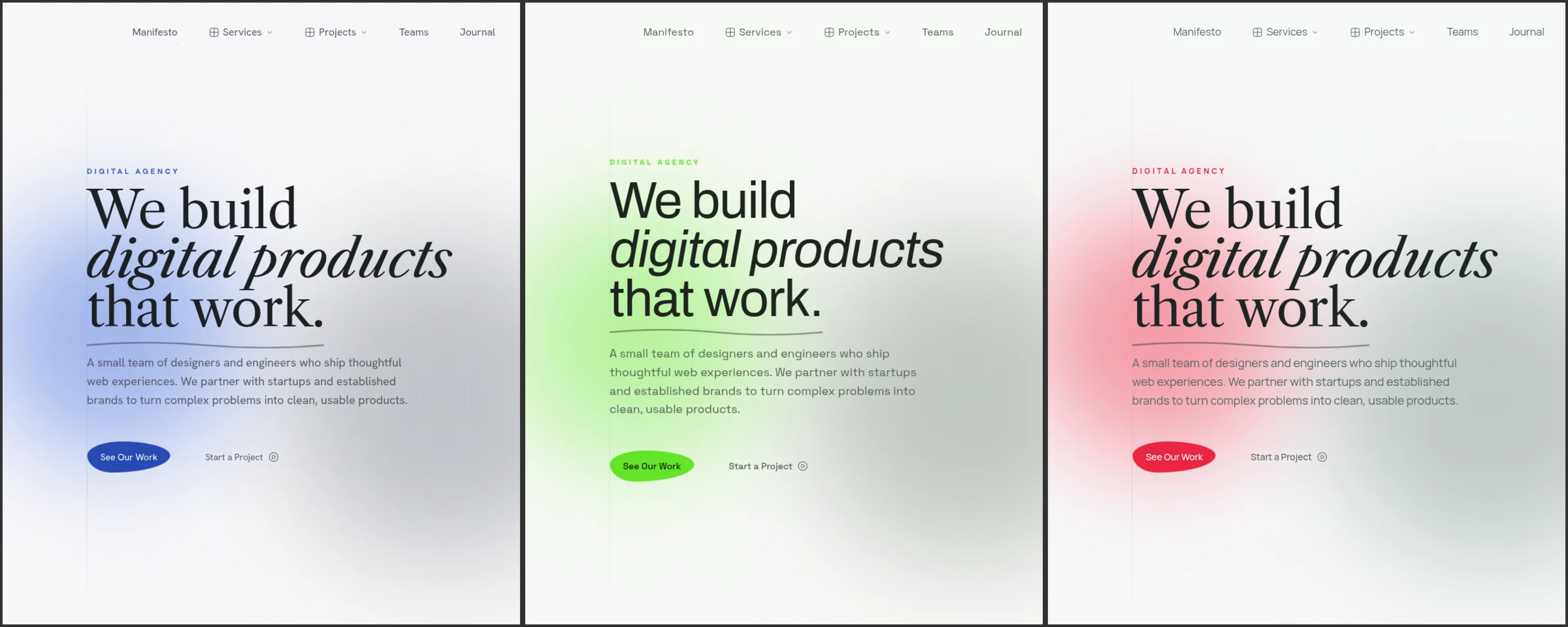
The theme command takes a sentence, a logo, a reference site, or a single colour code. You get a full palette back.
That is around forty colours and shades per theme, light and dark, with every pairing checked so text stays readable before the theme is saved. Seven directions ship with it: Calm, Warm, Bold, Dark, Earthy, Cool, and Editorial. Pick one and go, or describe your own.
The contact form is your choice
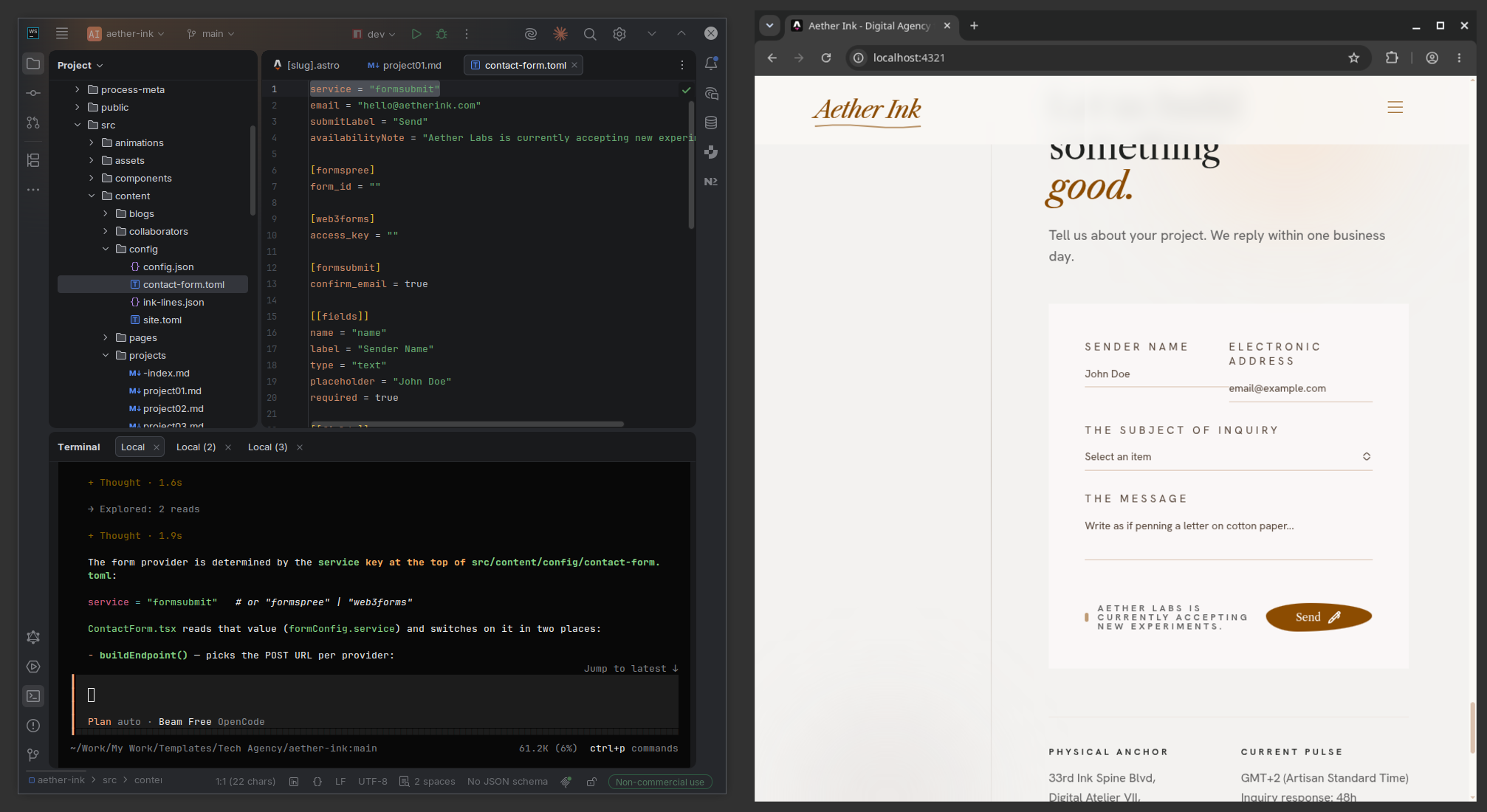
Most templates pick your contact provider for you. Aether Ink gives you three: Formspree, Web3Forms, and FormSubmit.
Switching is one line in one file. Everything around the form is a setting too: the labels, the placeholders, the thank-you message, and what the visitor sees when something fails.
What it refuses to break
Five commands do the work nobody enjoys.
/polish
Improves an article without inventing facts.
/update-process
Pushes a process change to every page that states it.
/remove
Lists what depends on a page before deleting it, then waits for approval.
/audit Checks the site for quiet problems.
/check-images
Finds missing pictures, wrong names, and empty image descriptions.
Each one exists because of a real mess. Deleting a page is easy. Deleting a page that three others link to is how a site rots. /remove refuses to guess.
The build
Concept
Literature and technology, joined by the ink and spine composition.
Visual exploration
Stitch, a design tool, turned the direction into a design reference for a technology agency.
Template development
The core pages, and the content structures behind them.
Integrations
A contact form that does not lock the owner to one provider.
AI workflows
Commands for creating, theming, and maintaining content, shaped around the existing content.
Safety
Dependency checks before removal, build checks, image validation, and quotes that stay untouched.
What you get
Five sections.
Home, Projects, Services, Blog, and About, plus the contact flow.
Six content commands.
One per content type, each a short interview.
Seven theme presets.
Calm, Warm, Bold, Dark, Earthy, Cool, and Editorial.
Three contact providers.
Formspree, Web3Forms, and FormSubmit, behind one file.
Five maintenance commands.
Including a delete that checks dependencies first.
Aether Ink sells as a single purchase at $1,200. It belongs to Huzaifa Web Studio, runs on your own domain, and has no subscription behind it.
A website should not need a code change every time its content changes.
THE TEMPLATE
Want Aether Ink for your studio, or a version shaped around your own brand? Tell us what you are building.