Web Development
Custom web development services for SaaS and startups. React and TypeScript frontends, Node.js APIs, and databases engineered to ship fast and scale clean.
We build once.
Custom web development, engineered as a system
A web application is not a collection of pages. It is a system: data, interfaces, and rules that have to agree with each other under load. When those pieces are designed together, the product grows by adding features. When they are improvised, every new feature costs more than the last.
That is the difference between custom web development and template assembly. The architecture decides whether version two is a release or a rewrite.
Every engagement here starts the same way: map the data model, define the boundaries, choose the boring technology that will still be supported in five years. Then build.
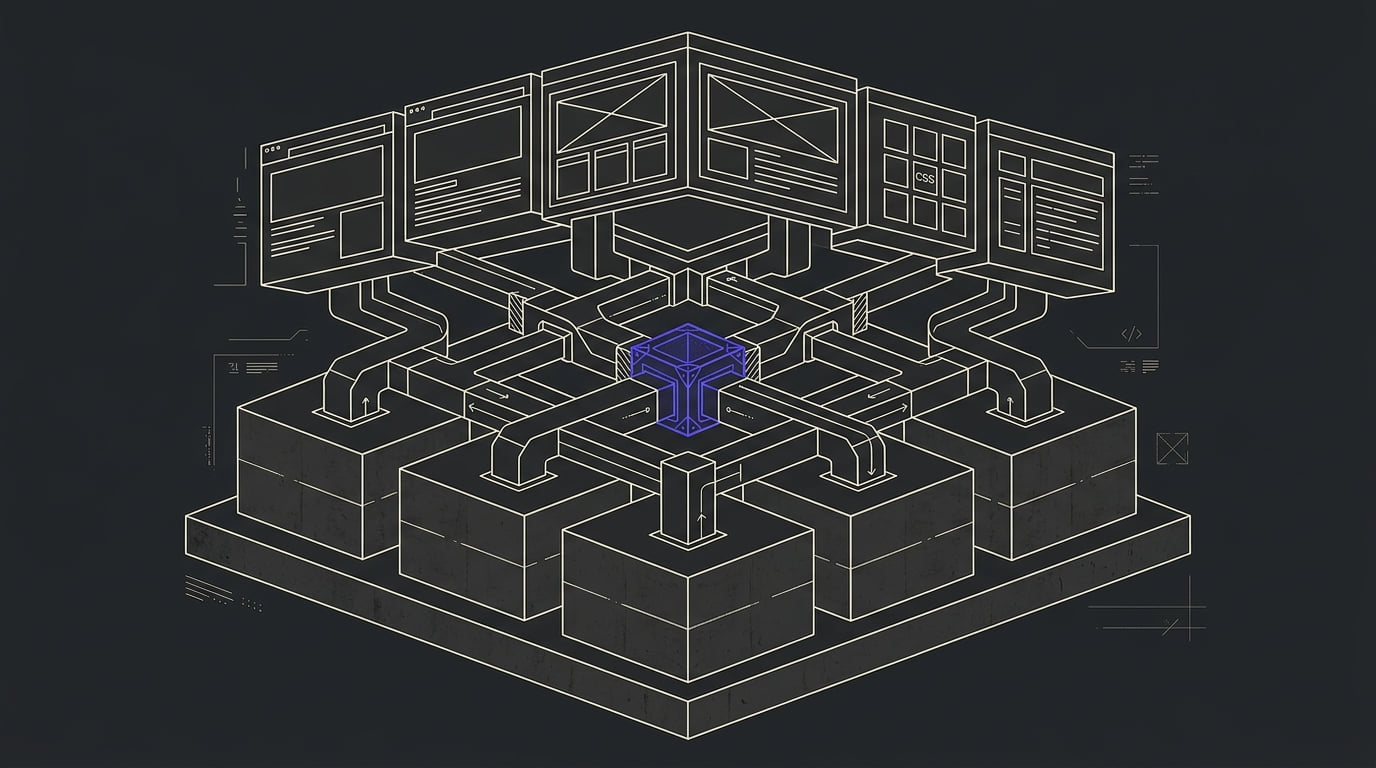
What you get
React and TypeScript frontend.
Typed end to end. If it compiles, the contract between components holds.
Node.js API layer.
Express-based services with validation at every boundary, so bad data never reaches the database.
PostgreSQL data modeling.
Prisma schemas designed for the queries you will actually run, not the ones a tutorial ran.
Authentication and access control.
Role-based permissions built in from day one, not bolted on after the first security scare.
Integrations that survive contact.
Stripe payments, OpenAI features, email, and third-party APIs wrapped in error handling and retries.
Pipelines, not prayers.
Automated testing and deployment configured before launch, so shipping stays routine.
How the engagement runs
Architecture first.
Product requirements become a data model and a system boundary map before a single component is written.
Vertical slices.
Each feature ships end to end, database to UI. The product is usable from the first sprint, not the last.
Review and harden.
Performance, accessibility, and security checks run against every release. AI-assisted code review catches edge cases a tired human misses.
Handover.
Clean documentation, a repo you own, and a walkthrough of every decision that matters.
What engineering discipline changes
| DIY builders | Typical agency | Engineered build | |
|---|---|---|---|
| Data model | Whatever the form needs | Per-page decisions | Designed up front |
| Type safety | None | Partial | End to end |
| First change request | Rebuild | Scope meeting | A pull request |
| Year two | Rewrite | Retainer hostage | New features |
| Ownership | Platform lock-in | Varies | Fully yours |
Fast is a feature. Surviving your own success is a bigger one.
Who this is for
Startup founders who need an MVP that will not need a rewrite when traction arrives. SaaS teams replacing a fragile internal tool. Agencies that need a white-label engineering partner who ships on time. Businesses whose website is revenue infrastructure, not a brochure.
Shipped case studies show the same pattern at production scale: clear data models, typed systems, delivered fast. New work returns to the portfolio when the next engagements land.
Start the build
OPENING DECEMBER 2026
Bring a problem, a napkin sketch, or a legacy codebase. The first conversation produces an architecture opinion, an honest timeline, and a number. From there, the system takes shape one working slice at a time.
Questions,
answered.
[ FAQ ]
Direct answers for founders and teams evaluating Huzaifa Web Studio as their technical partner.
It depends on scope, not hours. A focused MVP typically starts in the low four figures, while a full SaaS platform with payments, dashboards, and integrations scales from there. You get a fixed estimate after the architecture phase, before heavy build work begins.
A lean MVP ships in two to four weeks. A production platform with auth, payments, and third-party integrations typically runs four to eight weeks. AI-augmented workflows compress timelines without cutting the review and hardening steps.
Yes. Full repository ownership, documentation, and deployment access transfer to you at handover. There is no lock-in and no proprietary runtime holding your product hostage.
Yes. The engagement starts with an audit of the current architecture, dependencies, and debt. You get a written assessment before any commit, so you know exactly what you are inheriting.
You can run the product yourself or continue with an ongoing maintenance retainer that covers monitoring, updates, bug fixes, and small feature work with a guaranteed response window.